


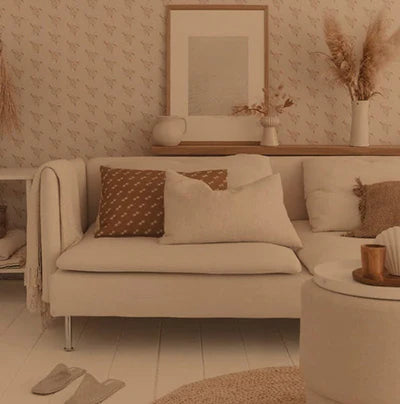






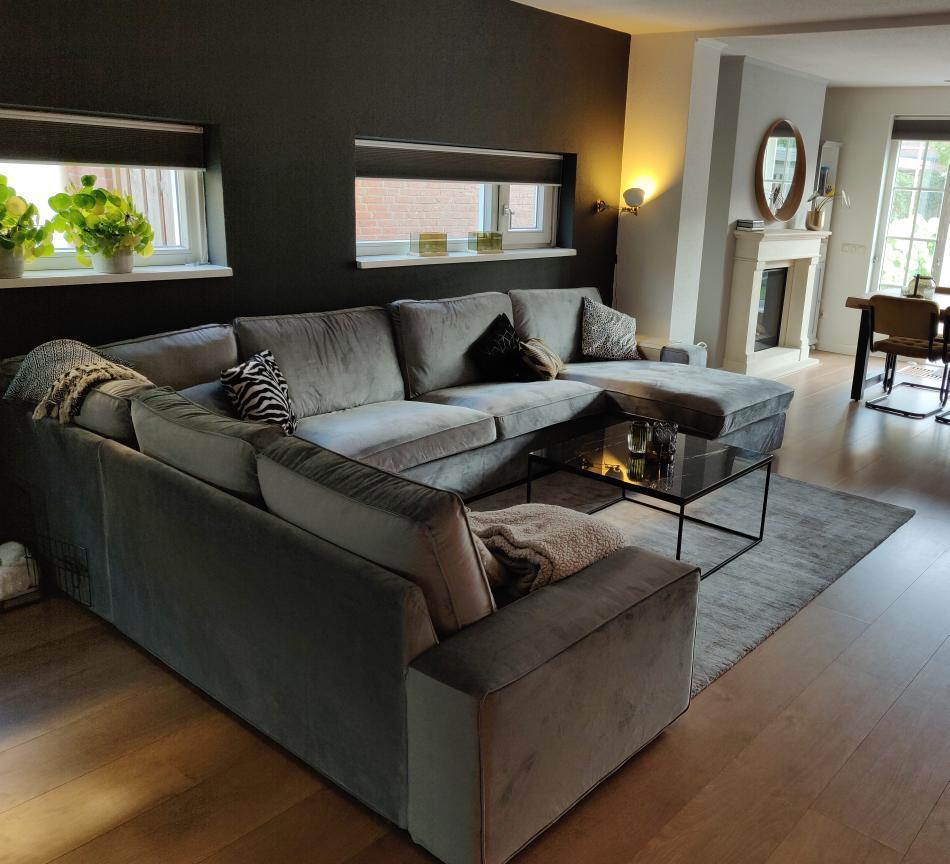
A large living room seems ideal but can feel challenging in practice. The space is there, but furniture can quickly feel like it’s floating. The seating area then doesn’t feel like one whole, but like a collection of separate elements on a large floor surface.
A corner sofa can help give such a space more structure. The shape of the sofa naturally creates a clear seating area. But just putting in a large sofa isn’t enough. The placement, rug, lighting, cover color, and styling together determine whether the room feels spacious and cozy.
In this guide, you’ll learn how to make a large living room warmer and more organized with a corner sofa, without the space feeling crowded or heavy.
Start with the room layout
Before choosing or moving a corner sofa, it’s smart to look at the room as a whole. Where does most daylight come in? Where are the main walkways? Where are doors, windows, cabinets, and the dining area?
In a large living room, it’s often better not to automatically place the sofa against the longest wall. Sometimes it works better to pull the corner sofa slightly into the room. This creates a clear seating area that’s separate from the edges of the room.
Use the corner sofa as a soft room divider
A corner sofa can divide a large living room without needing walls, cabinets, or screens. The long side can, for example, mark the boundary between the seating area and the dining area. The short side can face the window, TV, or fireplace.
This creates a zone where you can really sit and relax. The rest of the room stays open but feels less empty. Especially in open living rooms with a kitchen or dining area, this can bring a lot of calm.
Keep walkways clear
A cozy seating area shouldn’t come at the expense of ease of use. Leave enough space around the sofa, especially between the sofa, coffee table, doors, and walkways. If you always have to maneuver around the corner sofa, the room quickly feels less comfortable.
A simple test helps: walk through the room a few times as if you’re grabbing coffee, walking to the dining table, or going outside. If the sofa fits logically into those routes, the layout is probably good.

Choose a corner sofa that fits the scale of the space
A large living room calls for furniture with enough presence. A sofa that’s too small can seem lost, while a corner sofa that’s too big can make the room feel heavy. The goal is balance: the sofa should support the seating area, but not take over the whole room.
So don’t just look at the number of seats, but also at the balance between the sofa, rug, coffee table, and other furniture. A generous corner sofa works best when there’s enough space around it.
Large Kivik setups as a calm base
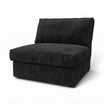
Kivik works well in a spacious living room, especially because of its wide shape, deep seat, and modular possibilities. With a larger setup, it is important that the sofa visually remains one whole. If different elements, colors, or fabrics don’t match well, the seating area can look restless.
With covers for large Kivik corner sofa setups you can make the sofa blend more calmly with your interior. Especially with a large sofa, a cohesive cover is important because the fabric determines a large part of the visible surface.
Think not only bigger but also better distributed
A large living room doesn’t always call for the biggest corner sofa. Sometimes a slightly more compact corner sofa with an armchair, pouf, or side table works better. This way, the seating area feels less massive and there is more variety in the space.
Ask yourself how the sofa is used. Does the whole family sit on the sofa at the same time? Do you often have guests? Do you mainly want to lounge or also easily have conversations? The right arrangement follows from those daily habits.
Define the seating area clearly with a large rug
In a large living room, a rug is often not just decoration but a necessary connecting element. Without a rug, the sofa, coffee table, and armchairs can seem to stand apart. A large rug brings them together into one seating area.
Choose a rug that is slightly too large rather than too small. A small rug under only the coffee table often makes the seating area feel smaller and less mature.
Let the furniture partly stand on the rug
A good rule of thumb is that at least the front legs of the sofa should be on the rug. In a spacious living room, the rug can be larger so that armchairs, poufs, or side tables also fall within the same zone.
This way, the seating area feels like one whole. The sofa no longer stands alone on the floor but becomes part of a clear, comfortable spot.
Match the rug to the sofa cover
The rug doesn’t have to be the same color as the sofa, but it should fit the same atmosphere. With a light cover, a rug with subtle texture can add depth. With a dark sofa, a lighter rug can prevent the seating area from feeling too heavy.
Also pay attention to texture. A coarsely woven rug can add warmth to a sleek sofa. A calmer, flatter rug works better if the sofa cover already has a lot of texture.
Work with multiple layers of light
A large living room rarely has enough with just one ceiling lamp. Light from a single point often makes the room harsh, flat, or unevenly lit. For a cozy seating area, you need multiple layers of light.
Think of a floor lamp by the corner of the sofa, a table lamp on a sideboard, soft lighting at a reading spot, and possibly dimmable lamps around the seating area. This way, you can adjust the atmosphere to the time of day.

Use light to connect the corner sofa with the room
Don’t place lighting only above or next to the sofa, but also around it. A lamp behind or beside the sofa can soften the seating area. A lamp on a cabinet across the room can visually balance the space.
In a large living room, this is important. If only the sofa is lit, the rest of the space feels dark and disconnected. When the light is distributed, the whole room feels more cohesive.
Choose warm and dimmable light
For coziness, warm light usually works better than cool white light. Dimmable light sources are handy because you want more brightness during the day and softer light around the sofa in the evening.
Also pay attention to lampshades. A fabric or matte shade diffuses light more softly than an open, harsh light source. That can do a lot for the atmosphere around a large corner sofa.
Make sure a large corner sofa stays airy
A large corner sofa doesn’t have to look heavy. Especially visible floor, slim furniture around the sofa, and enough space at the edges help make the seating area feel airier.
Where possible, leave some space visible around the sofa. Choose a rug that supports the sofa but doesn’t darken everything. Work with light accents, open side tables, or slim lamps to keep the seating area visually lighter.
Use height and legs consciously
Sofas on higher legs can visually lighten a room because more floor remains visible. That doesn’t mean every corner sofa needs high legs. The principle is mainly that visible floor, slimmer shapes, and air around furniture make a space feel less heavy.
How sofas on high legs affect spaciousness, you can read further in a sofa on high legs that makes your room look bigger.
Break up large surfaces with texture
A large corner sofa has a lot of fabric surface. If that surface is completely flat, the sofa can look big and dominant. Texture helps soften that flatness.
Think of a subtle weave, corduroy, chenille, velvet, or a mottled fabric. The texture doesn’t need to be busy. The goal is to give the sofa depth without making the seating area feel restless.
Use color to bring warmth
Color determines how a large corner sofa feels in the room. A light cover can make the sofa feel airier. A dark cover can add more depth and coziness. Warm neutral colors often strike a nice balance in between.
Think of sand, taupe, warm gray, greige, olive green, rust brown, or soft earth tones. These colors can make a large living room cozier without becoming too bright or dominant.
Repeat colors in multiple places
A large living room feels calmer when colors are repeated. If the cover has a warm sand color, you can echo that undertone in curtains, cushions, a rug, or accessories. It doesn’t have to be the exact same color.
Light variations within the same palette make the space feel mature. The seating area then feels connected, not separate from the rest of the room.
Use contrast sparingly
A large living room can handle more contrast than a small space. Still, it’s wise to use contrast deliberately. A dark sofa with light cushions can be beautiful. A light sofa with a dark rug can also work. But if the sofa, rug, curtains, and accessories all strongly contrast, the room quickly feels busy.
Prefer one clear contrast and keep the rest calmer.

Add coziness with textiles
Textiles soften a large corner sofa, but only if used intentionally. Too many cushions, throws, and loose layers can make the seating area look cluttered.
Work with different cushion sizes
Prefer a few larger cushions over many small ones. Large cushions better suit the scale of a corner sofa and add softness to the back. Optionally add one or two smaller accents, but keep the overall look calm.
Choose colors that match the cover, the rug, and the curtains. This makes the sofa feel layered, but not busy.
Use a throw as a soft layer
A throw can make the corner sofa warmer, especially when you place it deliberately. For example, drape it over one corner, over the chaise longue, or on the end of the sofa. This creates a natural resting point without covering the entire sofa.
Pay attention to material and color. A chunky knit throw adds more texture. A smooth throw can be calmer than a cover that already has a lot of texture.
Also work with height along the walls
In a large living room, the focus quickly falls on the floor: sofa, rug, table, armchair. But the walls and vertical lines are just as important. If all the furniture stays low, the room can still feel empty or unfinished.
Use height along the walls. Think of a large cabinet, a tall plant, a wall lamp, an artwork, or a calm gallery wall. This draws the space upward and makes the seating area more part of the whole room.
Prefer a few large elements over many small ones
In a large space, too many small decorations often look cluttered. Larger objects better match the scale of the room. One large artwork can be calmer than ten small frames. A tall plant can do more than several small pots.
This keeps the living room spacious, but not empty.

Connect the seating area with the rest of the living room
A large living room often has multiple functions. There may be a seating area, dining area, reading nook, play corner, or open kitchen. The corner sofa can be the anchor point, but the rest of the space must continue to interact with it.
Therefore, repeat materials and colors from the seating area in other parts of the room. Wood from the coffee table can be echoed in the dining table. The color of the cover can be reflected in chairs, curtains, or accessories. A metal accent in a lamp can subtly reappear elsewhere.
Look beyond one sofa
Sometimes it’s not just about the corner sofa itself, but how all the soft elements in the space work together. If you also have armchairs, other IKEA models, or separate sofa parts, it can be useful to look more broadly at covers.
Via handmade sofa covers for IKEA models you can better coordinate different models and styles. That especially helps when you want to keep a large living room calm and cohesive.
Frequently Asked Questions
How do you make a large living room cozier with a corner sofa?
Start with a clear seating area. Don’t automatically place the corner sofa against the wall, but use it to structure the space. Then add a large rug, warm lighting, and soft textures.
How big should a rug be with a corner sofa?
Choose a rug that is large enough to place at least the front legs of the sofa and the coffee table on it. In a spacious living room, the rug can be bigger so the entire seating area becomes one zone.
Which color corner sofa works well in a large living room?
Warm neutral colors like sand, taupe, greige, and warm gray often work well. Olive green, rust brown, or other soft earth tones can also make a large space cozier.
Does a corner sofa have to be against the wall?
Not always. In a large living room, it often works better to place the corner sofa slightly into the room. This creates a clear seating area and makes the room feel less empty.
How do you prevent a large corner sofa from looking too heavy?
Work with air around the sofa, a suitable rug, light accents, texture, and multiple layers of lighting. Also, visible floor and slimmer furniture around the sofa can help.
Conclusion
Creating a cozy large living room with a corner sofa is about proportion, structure, and cohesion. The sofa forms the base, but only with the right placement, a large rug, multiple layers of lighting, and soft textures does the seating area become truly inviting.
Don't just look at the sofa itself, but at the whole space around it. Repeat colors, use height along the walls, and make sure the seating area stays connected to the rest of the living room. This way, a large room doesn't feel empty or distant, but spacious, warm, and logically arranged.
