


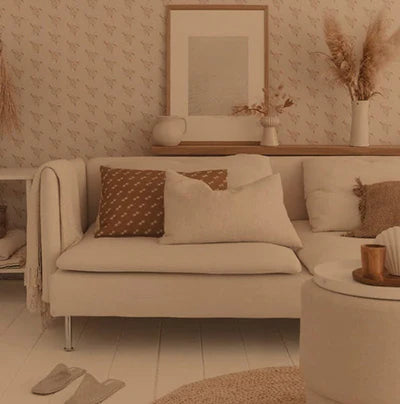





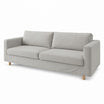
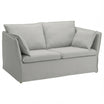
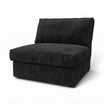
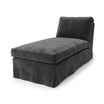

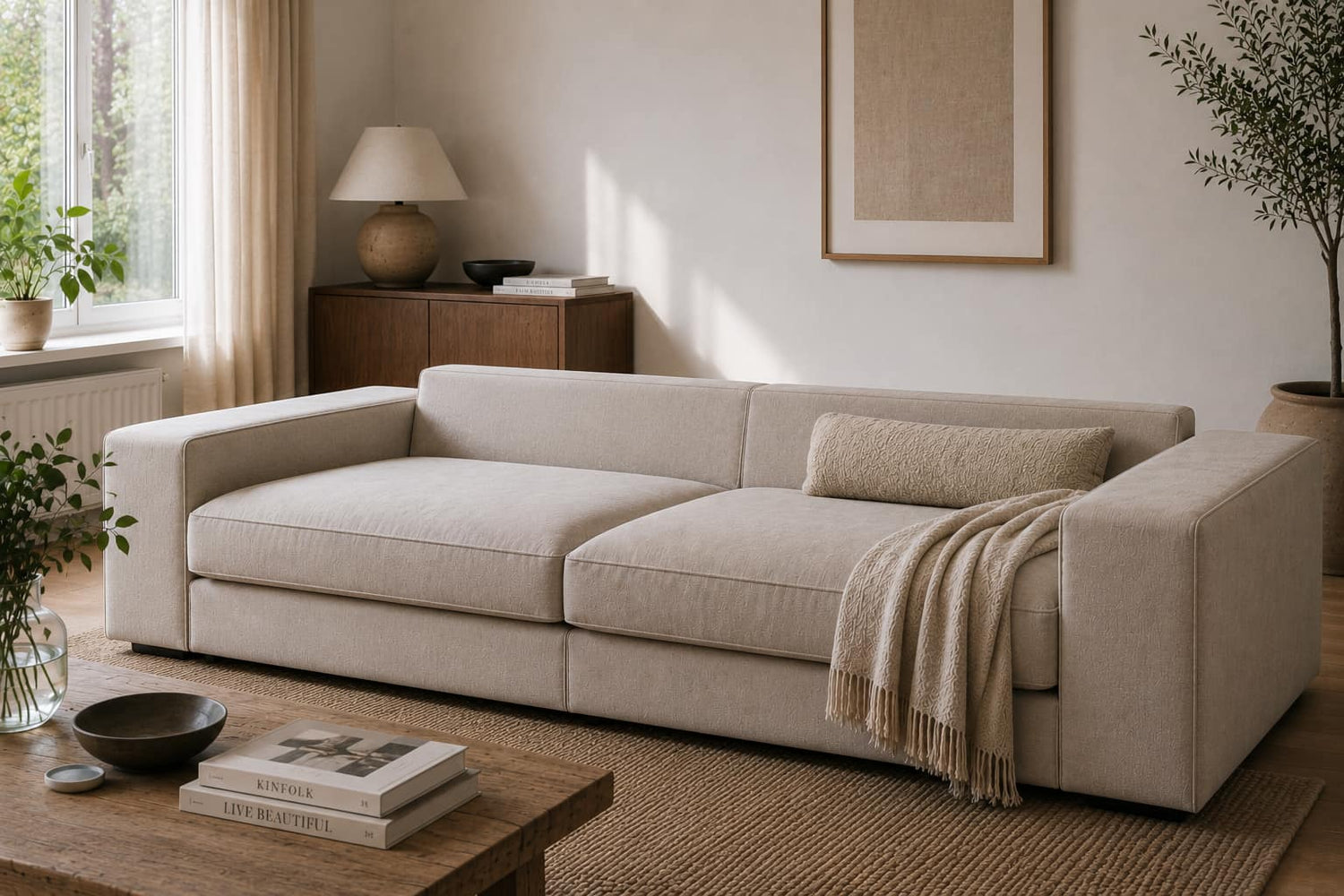
Sometimes a sofa changes not by adding something, but by leaving something out. Back cushions largely determine how full, soft, and traditional a sofa looks. When you remove them, the same sofa suddenly gets a sleeker, calmer, and more horizontal appearance.
This styling hack works especially well when your sofa has a nice basic shape. The seating area feels more open, the lines become clearer, and the sofa gains more space within the room as a whole. The result can resemble a daybed, a low lounge sofa, or a more minimalist hotel-like setup.
Still, this isn’t a trick that works equally well for every sofa and household. Comfort, back support, and daily use remain important. So it’s not just about whether a sofa looks good without back cushions, but especially about when this styling choice makes sense.
Why leaving out back cushions can work so well
Back cushions make a sofa softer and fuller, but they also hide part of the shape. Without back cushions, you can better see how the sofa is constructed. The seat looks longer, the backline becomes calmer, and the sofa gains more space within the room as a whole.
This works well in interiors where you want to create visual calm. Think of light walls, calm rugs, natural materials, and little loose decoration. The sofa doesn’t need to be full of cushions to feel cozy. The shape, fabric, and proportions do more work.
Without back cushions, the quality of the cover also becomes more important. Wrinkles, loose fabric, or a poorly fitting cover stand out more when the sofa remains simple. That’s why this look works best with a snug-fitting cover and a fabric that already has enough character on its own.
The daybed look
One of the strongest effects of this styling is the daybed look. The sofa then feels less like a classic couch and more like a place to lounge, read, or lie down. This can work surprisingly well, especially in a calm living room, guest room, or open living space.
The daybed look is all about horizontal lines. The sofa appears lower, longer, and simpler. This often makes the space feel more open, especially if you don’t add too many accessories.

How to build the daybed look
Start by removing the back cushions and first look at the base. Is the backrest neatly finished? Is the cover tight? Does the sofa still feel comfortable enough without extra support? If the base is right, you can continue styling.
Then place one or two larger cushions on one side of the sofa. A long cushion or a firm bolster works better than a row of small decorative cushions. This keeps the line calm, but still provides support when you want to read or relax.
A throw can soften the look. Drape it loosely over the seat or one armrest, but keep it simple. Too many layers make the sofa busy again and take away the sleek effect.
This approach works especially well for models with a low, wide shape. Think of covers for a sleek Kivik base, where the deep seat and wide armrests naturally suit a calm lounge vibe.
Where to place the sofa best
Placement matters a lot. A sofa without back cushions often looks good against a wall, under a window, or in a corner where the horizontal line remains visible. Place a small side table next to it with a lamp, book, or ceramic bowl so the sofa doesn’t look bare.
The space around it is also important. A large rug can visually connect the seating area. A floor lamp next to the sofa makes the spot more functional and prevents it from being just a styled object.
The relaxed version with loose cushions
Not everyone wants a fully sleek daybed look. If you find the sofa too empty without standard back cushions, you can work with loose decorative cushions. This keeps the lighter look but adds comfort and personality.
This approach suits bohemian, Scandinavian, and casual modern interiors well. The sofa feels lighter than with a full set of back cushions but warmer and more user-friendly than a completely minimalist setup.

How to combine loose cushions well
Choose a few well-chosen cushions rather than a large collection without direction. Two larger cushions and one smaller accent cushion are often enough. This keeps the sofa open but not empty.
Pay special attention to texture. For example, combine a smooth fabric with bouclé, corduroy, linen look, or velvet. The colors can stay calm as long as the materials provide enough contrast. This creates depth without making the sofa look messy.
Don’t place all the cushions perfectly straight. A slightly looser arrangement feels more natural. One cushion against the armrest, one slightly tilted against the back, and possibly a smaller cushion in front can be enough.
When this styling works less well
A sofa without back cushions looks nice but isn’t always practical. If you like to watch TV, work, or eat on the sofa for a long time sitting upright, the lack of back support can be annoying. In that case, a full daybed look is probably not the best choice for everyday use.
With sofas that have a hard or low backrest, this hack can also be less comfortable. The sofa might look good, but you may end up using it less. If you notice you use the sofa less often or less comfortably because of this, a hybrid setup is probably wiser.
A good compromise is to remove only part of the back cushions. For example, you can style one side of the sofa more sleekly and keep more support on the other side. This gives a more modern look without losing the sofa’s function.
Modular sofas and asymmetrical styling
This approach becomes especially interesting with modular sofas. Because such sofas consist of separate parts, you don’t have to style the entire setup the same way. You can leave one module without back cushions, while another module remains more comfortable and fuller.
With modern modular models, such as Söderhamn covers, That can work very well. The clean lines of the model remain visible, while you can still play with comfort, open space, and asymmetry.
A chaise longue can, for example, serve as a daybed corner without back cushions, while the straight seating area still keeps cushions. This creates a seating area that feels less standard and better matches how you use the space.

The role of wide armrests
Once you remove back cushions, the shape and sides of the sofa stand out more. Wide armrests can then help make the look stronger and more intentional, especially when you want to style the sofa as a calm lounge spot.
Want to get more out of it? Then read on about styling wide armrests. There you’ll find ideas that fit well with a sofa without a full back cushion set.
Fabrics that work well for a sleek look
The choice of fabric determines whether this look feels sleek, warm, or too bare. Without many loose cushions, the difference between a smooth fabric, corduroy, boucle, or chenille becomes more visible.
Smooth fabrics for calm
A smooth or finely woven fabric works well when you want a minimalist look. The sofa appears calmer and the shape remains central. This suits light interiors, Japandi style, or rooms where many other textures are already present.
Corduroy for subtle texture
Corduroy can be interesting when you want to keep the sofa sleek but not too flat. The ribs add texture without needing extra patterns. On a sofa without back cushions, that structure stands out more clearly.
Bouclé or chenille for softness
Bouclé and chenille make the look warmer. They ensure the sofa doesn’t feel cold or empty without back cushions. These fabrics work especially well when you want to combine the daybed look with a soft, inviting atmosphere.

Seasonal styling
One advantage of this approach is that you can easily adjust the sofa by season. The base stays the same, but cushions, throws, and accessories quickly change the atmosphere.
In summer
In summer, you can keep the sofa lighter and simpler. Think of one large cushion, a light throw, and calm colors like white, sand, beige, or light gray. The sofa then feels open and fresh.
In winter
In winter, the styling can be fuller. Add a wool throw, choose softer cushions, and use warmer tones. You don’t have to go back to a full set of back cushions to make the sofa cozy. A few well-chosen layers are often enough.
Dare to test before you decide
The beauty of this styling hack is that you don’t have to make anything permanent. You can simply remove the back cushions for a day and see how the space feels. Maybe you’ll notice the sofa looks sleeker, more spacious, and calmer. Or maybe you’ll miss the support and choose a hybrid solution.
Try out different arrangements. First without any back cushions, then with one large cushion, then with a few loose decorative cushions. This way, you’ll naturally discover which balance suits your interior and daily use.

Conclusion
Leaving out back cushions can give your sofa a completely different look. The sofa appears sleeker, more open, and more lounge-oriented. This styling hack works especially well with models that have a strong base shape, deep seating, or wide armrests.
However, it’s not just about appearance. Comfort remains important. For some households, a full daybed look works perfectly, while others are better off with a mix of back support and open styling.
The best approach is simple: try it out, see how the sofa feels, and adjust the styling to your own way of living. Sometimes less really is more, but only when it remains comfortable for everyday use.
