







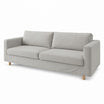
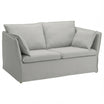
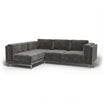

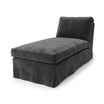

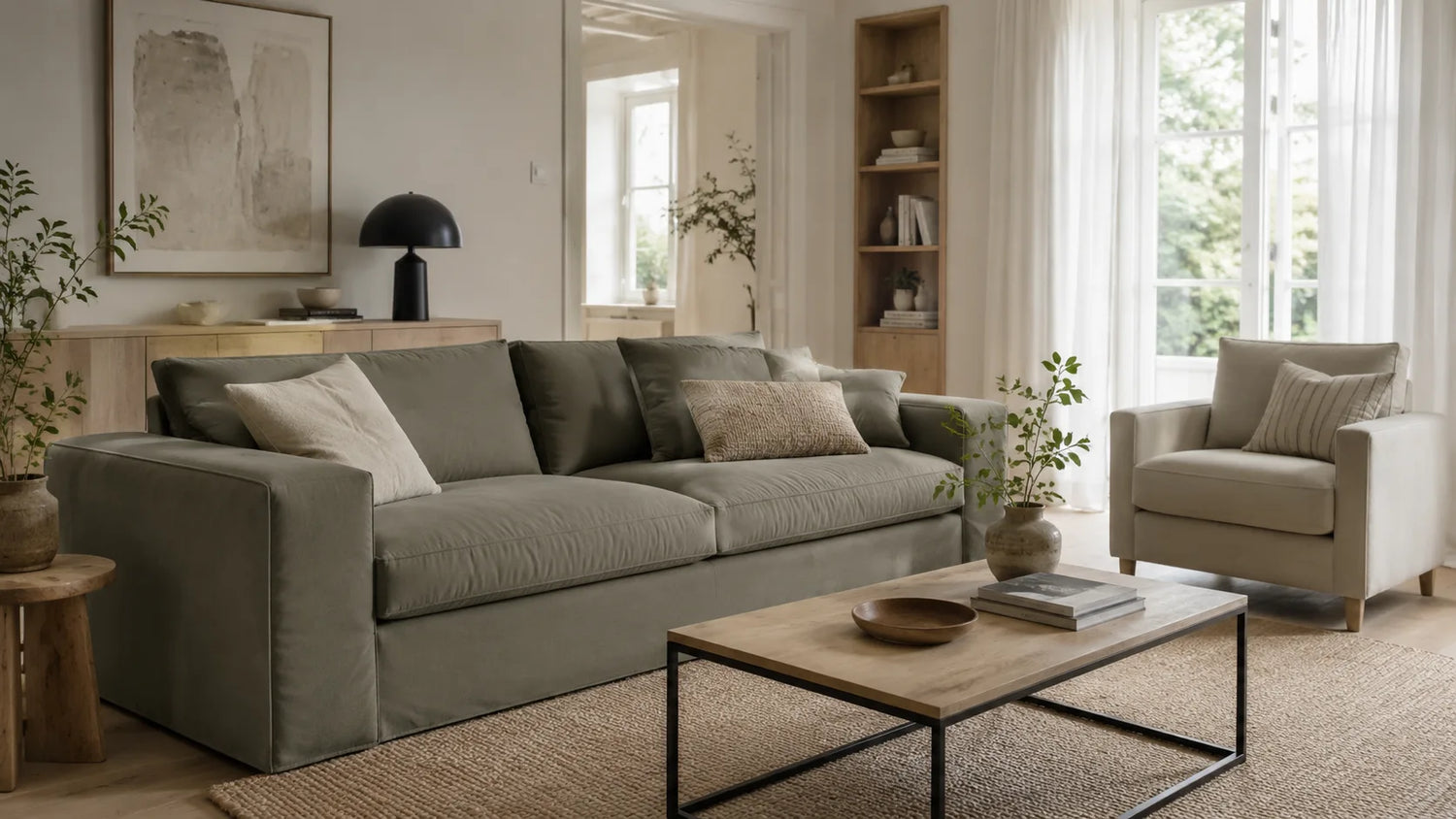
Choosing the right sofa is not just about color, fabric, or size. Equally important is how you want to sit on the sofa. Some people want to sink in deeply, pull up their legs, and relax all evening. Others prefer to sit more upright, with more back support and feet closer to the floor.
That difference may seem small, but it determines how you use the sofa daily. A deep lounge sofa feels informal and relaxed. A sofa with a more upright seat often feels more active and compact. Neither is automatically better. The best choice depends on your body, your living room, your routines, and the atmosphere you want to create.
In this guide, we compare deep lounging with sitting upright. We look at comfort, space use, interior style, fabric choice, and practical situations, so you can more easily determine which type of sofa fits your life.
The real difference between lounging and sitting upright
The difference between a lounge sofa and a more upright model mainly lies in seat depth, backrest, seat height, and posture. A deep sofa offers more space to lie down, hang out, or sit with legs pulled up. A more upright sofa usually supports a more active posture, where you stay sitting upright more easily.
With deep lounging, you use the sofa almost as an extended resting place. You watch TV, read half-lying down, or use a chaise longue to stretch your legs. When sitting upright, you use the sofa more as seating furniture for conversations, coffee, reading, or guests.
Comfort is personal
What is comfortable for one person can feel inconvenient for someone else. Someone who likes to lie stretched out will quickly find a shallow sofa limiting. Someone who likes to sit with both feet on the floor may find a deep sofa too low or too loose.
That’s why it’s important not only to look at how a sofa looks. Especially look at how you really use it. Do you often sit upright with guests? Do you mainly watch movies? Do you read a lot? Do you have children who play on the sofa? All these habits influence which seat depth makes sense.
When deep lounging works well
A deep lounge sofa fits well with a relaxed way of living. You then don’t choose a formal sitting posture, but space, softness, and freedom. Models with a deep seat, wide armrests, and a low shape invite you to sit in different ways.
Especially in living rooms where the sofa is the place for movie nights, afternoon naps, or relaxed family moments, deep lounging can be very comfortable. You don’t have to sit upright neatly. The sofa can be used as a real living space.

More space for legs and changing positions
A deep sofa gives you more freedom to change position. You can pull up your legs, sit at an angle, lie stretched out, or relax side by side with several people. This is handy when the sofa is mainly used for long evenings or quiet weekends.
For taller people, extra seat depth can be pleasant because it gives more legroom. For smaller people, the same depth can be less comfortable without an extra back cushion. That’s why it’s smart to consider not only the model but also the people who use the sofa daily.
A more informal atmosphere in the living room
A deep sofa often makes a living room feel more informal. It invites you to relax and can make the space feel softer. This suits modern, minimalist, or family-focused interiors where comfort is key.
Kivik is a good example of a model often chosen for its lounge-oriented shape. If you want to keep that base but change the look, then Kivik covers in different fabrics help to better coordinate color, texture, and atmosphere with your living room.
For more context on why this type of sofa remains so popular, a reference fits here the ultimate lounge sofa as an IKEA classic.
When deep lounging is less practical
A deep sofa isn’t ideal for everyone. If you like to read sitting upright, want to get up easily, or often have guests who want to sit actively, a deep lounge sofa can be less practical. You tend to sink down more and sometimes need extra cushions for good support.
Even in small or narrow living rooms, a deep sofa can take up a lot of floor space. The sofa itself may be comfortable, but the room can feel less spacious if walking paths become tight.
Pay attention to seat height and ease of getting up
A low, deep sofa can be wonderful for relaxing, but less practical when you want to get up quickly. This especially applies to people who prefer firm seating or have difficulty with low furniture. In that case, a slightly higher sofa or a more upright seat is often more practical.
This doesn’t mean a lounge sofa is wrong. It just means comfort isn’t only about sitting softly, but also about how easily you sit down, get up, and change position.
Extra cushions can make a difference
If you like a deep sofa but sometimes want to sit more upright, extra back cushions can help. They reduce the effective seat depth and provide more support when you read or work on a laptop.
So the choice doesn’t have to be completely black or white. A deep sofa can also be used more actively with the right cushions, as long as the basic shape fits your living room.
When sitting upright fits better
A sofa with a more upright seat suits people who use their sofa more often for conversations, reading, coffee, or visitors. The sitting posture is more active and often a bit more compact. You don’t have to shift cushions as much and usually get up more easily.
This type of sofa also works well in living rooms where the sofa is not only a lounge spot but also part of a neat seating area. Think of a room where you often receive guests or where the sofa faces the armchairs.

Better for conversations and visitors
With a more upright seat, you stay in easier contact with others. You slouch less, make eye contact more easily, and can get up faster to grab something. This makes this type of sofa nice for coffee visits, conversations, or a more classic seating area.
For people who don’t like to “disappear into” a sofa, an upright model often feels more manageable. You sit on the sofa, not halfway in it.
Practical in smaller spaces
An upright sofa often takes up less depth. This leaves more space for a coffee table, walking path, or extra chair. Especially measure the distance between the sofa and coffee table, because that’s where you’ll notice most quickly in daily use if the seating area feels too cramped.
Visually, a more compact model can also create a calmer effect. A deep sofa can quickly dominate a small room, while a less deep sofa stays easier in proportion.
When sitting upright is less comfortable
An upright sofa is practical but not always the best choice for long relaxation. If you like to lie down or sit with your legs up, the seat can feel too short. Then you might quickly start sitting at an angle or use the sofa in a way it’s less suited for.
For movie nights or long lounging sessions, a more upright model can feel less inviting. The comfort is then more focused on sitting than on lying down comfortably.
Less suitable for lying down comfortably
If the sofa is mainly your spot to relax after a long day, a more upright seat can feel too formal. You stay in a more active posture, which can be nice for reading or visitors, but less so for fully relaxing.
A loose pouf can help, but it feels different from a fixed chaise longue or deep lounge sofa. A pouf offers flexibility but can shift and also takes up space when you use it.
The role of interior style
Sitting posture and interior style often go together. Deep sofas usually have a lower, wider, and more modern appearance. They fit well in calm, contemporary interiors with many horizontal lines. Sofas with a more upright seat often have a more classic or compact look, especially when they have higher backrests, rounded armrests, or loose cushions.
Still, you don’t have to strictly link style and comfort. A modern lounge sofa can become warm through the right fabric and color. A classic model can look fresher when combined with a simple cover and fewer accessories.
Modern doesn’t have to be cold
A deep sofa with clean lines can feel very warm when you choose a soft fabric and a calm color palette. Think of a Kivik-like lounge sofa in taupe, warm gray, or olive green, combined with a woolen throw, wooden coffee table, and matte ceramics.
This keeps the base modern but gives the seating area enough softness to avoid feeling cold.
Rustic doesn’t have to be old-fashioned
A more upright model with a higher back or rounder armrests can look fresh when you keep the styling simple. Think of a light cover, a simple wooden floor, one large rug, and few decorative cushions.
If you are unsure between a warm classic atmosphere and a tighter modern base, this fits well with choosing between rustic coziness and sleek modernism. From there, you can look further at how shape, fabric, and color together determine the style of your sofa.
The influence of fabric on the sitting experience
Fabric not only determines how a sofa looks but also how it feels in use. A smooth fabric gives a different experience than a soft or textured fabric. Especially on a deep sofa, that difference can be clear.
A smooth fabric can feel tight and cool. You slide more easily in your position, which can be pleasant when lounging. A textured or softer fabric can provide more grip and make the sofa feel warmer. That can be nice when you like to sit or lie down for a long time.

Fabric can make a sofa feel more active or softer
On a deep sofa, a soft fabric can enhance the lounge feeling. On a more upright sofa, a tighter fabric can emphasize the shape. The right choice therefore depends not only on taste but also on how the sofa is used.
Pay attention to maintenance. A fabric that feels very nice must also suit your household. Children, pets, guests, and daily use can have different requirements than a quiet living room for two people.
How to choose between deep lounging and sitting upright
The best choice is made by honestly looking at your daily habits. Not at the sofa that looks best in a photo, but at the way you really sit.
Choose deep lounging if you often watch TV, like to sit with your legs on the sofa, want an informal living room, or have a spacious seating area. Choose sitting upright if you often read, receive many guests, want to get up easily, or have a smaller living room.
Ask yourself these questions
- Do you usually sit upright or often lie stretched out?
- Do you mainly use the sofa for TV, reading, guests, or family?
- Do you have enough space for a deep sofa?
- Do you find it important to get up easily?
- Does the sofa fit the atmosphere of your interior?
- Do you need extra cushions or a pouf to sit comfortably?
These questions make the choice much more concrete. A sofa is not a separate object. It must fit your body, your room, and your routines.
Frequently Asked Questions
Is a deep sofa always more comfortable?
No. A deep sofa is nice if you like to lounge, lie down, or sit with your legs up. If you prefer sitting upright or want to get up easily, a less deep sofa can be more comfortable.
Is sitting upright better for your back?
That depends on your body and use. A more upright seat can provide more support when you sit actively, but staying in one position for a long time is never ideal. Changing posture remains important.
Which sofa fits better in a small living room?
Often, a less deep sofa works better in a small or narrow living room because it leaves more walking space. A deep sofa can also work, but then the rest of the layout should remain calm.
Can I make a deep sofa sit more upright?
Yes, partly. Extra back cushions can reduce the seat depth and provide more support. This makes a deep sofa more flexible, especially if different people use the sofa.
Which style suits a lounge sofa?
A lounge sofa fits well with modern, minimalist, and informal interiors. With warm fabrics and calm colors, it can also feel cozy and homely.
Conclusion
The choice between deep lounging and sitting upright is not just about comfort, but about how you live. A deep sofa suits relaxation, movie nights, informal seating areas, and space to change positions. A more upright sofa is better for conversations, reading, smaller rooms, and a more active sitting posture.
The best sofa is not the one that is the most beautiful or ergonomic according to the rules. It is the sofa that matches your daily rhythm. Look at your posture, space, guests, family, and interior style. Then you can use the right cover, fabric, and color to ensure the sofa is not only comfortable but also naturally fits in your living room.
